
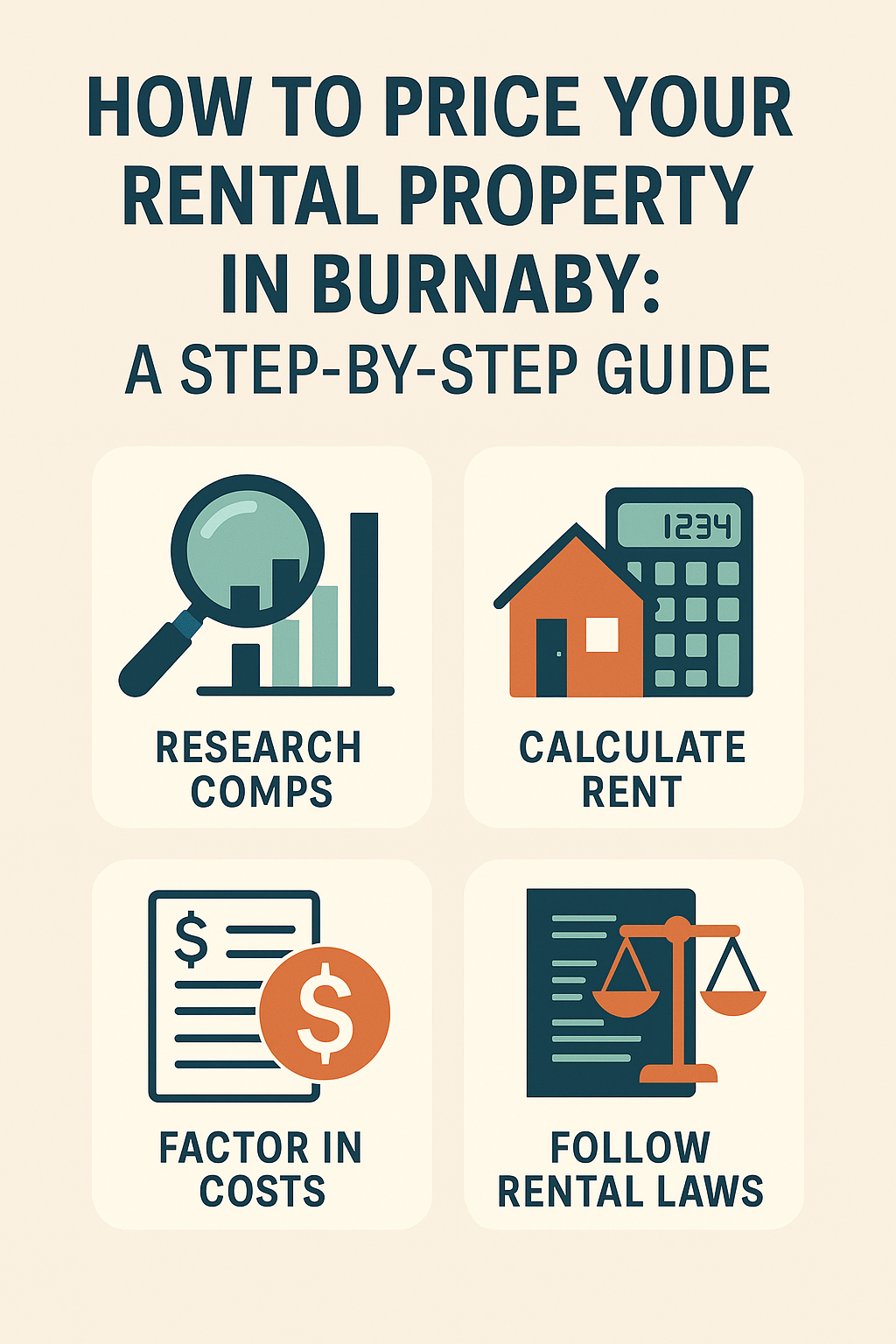
How to Price Your Rental Property in Burnaby
To set the right rent in Burnaby, compare similar local listings (comps), factor in your costs, and use a rent calculator to adjust for amenities and vacancy. Average one-bed units go for ~$2,300, but features like parking, utilities, and upgrades matter. Ensure your rent covers expenses (taxes, insurance, maintenance) and complies with BC’s legal rent increase cap (3% in 2025). Reassess rent yearly or when the unit turns over. Avoid common mistakes like overpricing or underestimating costs. Use market data + cost-based sanity checks to confidently price your rental.
Introduction
Not sure how much to charge for rent in Burnaby? You’re definitely not the only one. Whether you’re renting out a unit for the first time or managing several properties, setting the right price can feel tricky. If the rent’s too high, it might sit empty. Too low, and you could lose out on income. With rising costs and specific rules in BC, it’s important to find a fair balance. This guide will walk you through how to figure out the right rent — using real data, simple calculations, and local rules — so you can feel confident in your decision. For personalized help or local rental insights, check out Rental Rabbit’s services.
1. Benchmark Local Market Rates
Start by checking what similar units are renting for in your neighborhood:
- Use platforms like Rentals.ca, PadMapper, or Craigslist
- Compare units with similar size, layout, amenities, and condition
- Adjust for upgrades (e.g., renovated kitchen, in-suite laundry) or included utilities
- Example: In 2025, average rent for a one-bedroom in Burnaby is around $2,289
To stay on top of the local market, explore Rental Rabbit’s insights and community support.
2. Use a Rent Calculator with Property Adjustments
Build or use a rent calculator that includes:
- Square footage, bedrooms, bathrooms
- Special features (e.g. balcony, parking, in-unit laundry)
- Included utilities (water, heat, electricity)
- Location within Burnaby (Brentwood, Metrotown, etc.)
- A 5-10% vacancy buffer
Adjust the base rent from comps based on these features. For example, a new appliance package might add 3%, while including utilities could reduce rent slightly. For access to tools and templates, connect with Rental Rabbit for hands-on assistance.
3. Factor in All Costs & Expenses
Your rent should cover:
- Mortgage and interest
- Property taxes
- Insurance
- Maintenance and repair costs
- Vacancy periods and downtime
- Property management fees (if applicable)
Add a reserve for future upgrades and wear-and-tear. Your rent must not just match market rates but sustain long-term profitability.
For more on landlord cost planning, review insights from the Canadian Real Estate Association (CREA) and LandlordBC.
4. Use Cap Rate, GRM, or Percentage of Value
To validate your pricing:
- Cap Rate = Net Operating Income ÷ Property Value
- GRM = Property Value ÷ Annual Gross Rent
- Rule of Thumb = 0.8% – 1% of property value per month
These help confirm that your rent aligns with your financial goals, especially if you’re purchasing or refinancing the property. CMHC’s rental market reports can also provide helpful benchmarks.
5. Follow BC’s Legal Rent Increase Rules
BC’s Residential Tenancy Act limits annual rent increases:
- In 2025, the cap is 3%
- You must give 3 months’ written notice using government forms
- One increase allowed every 12 months
- Special applications can be made for capital improvement increases
Stay compliant by checking updates from the BC Residential Tenancy Branch regularly.
6. Reassess Rent Annually or at Turnover
- Review rents every 12 months, even if no change is made
- Adjust when a tenant moves out (no cap on new tenancy pricing)
- Monitor changes in demand, new developments, or rising costs
This keeps your rent competitive and legally compliant. For help during lease renewals or tenant transitions, explore Rental Rabbit’s service options.
7. Avoid Common Pricing Mistakes
Many landlords make these errors:
- Overpricing (leading to longer vacancies)
- Underpricing (missing out on potential income)
- Skipping research or market comps
- Forgetting to include all ownership costs
- Not adjusting rent regularly
Always support your rent with current data and cost analysis. Consider booking a consult with Rental Rabbit to avoid these common pitfalls.
8. Example Walkthrough: Pricing a Unit
Let’s say you have an 850 sq ft, 2-bedroom apartment in North Burnaby:
- Comps suggest $2,900 monthly rent
- You add 3% for new appliances = $2,987
- Subtract 2% for included heat/water = $2,927
- Add $75 for parking = $3,002
- Subtract 5% vacancy buffer = $2,852
Final rent: $2,850 – $2,900, depending on your target.
Conclusion
To confidently price your rental in Burnaby:
- Start with market comparisons
- Adjust using a rent calculator
- Factor in all costs
- Validate using financial ratios
- Follow BC rent control laws
- Reassess each year or at turnover
With this step-by-step method, you’ll protect your investment and attract the right tenants. For full-service guidance or questions, don’t hesitate to contact Rental Rabbit.
FAQs
How much rent can I charge for a property in Burnaby?
It depends on the size, location, amenities, and condition of your unit. One-bedroom units average ~$2,300 in 2025, but rents vary widely across neighborhoods.
What factors should I include in a Burnaby rent calculator?
Include square footage, bedrooms, amenities, parking, included utilities, location, condition, and a vacancy buffer of 5-10%.
How do I estimate profit after expenses when pricing rental property?
Subtract mortgage, taxes, insurance, maintenance, and vacancy costs from your rental income to find your net operating income.
What are the legal rent increase limits in Burnaby / BC?
In 2025, the cap is 3% per year with one increase allowed every 12 months. Notice must be given 3 months in advance with proper documentation.
How often should I adjust rent for an existing rental unit in Burnaby?
Once per year, or when the unit becomes vacant. Always comply with legal limits and notice periods.




Join The Discussion